
South Maui's vacation rental landscape split decisively following the enactment of local housing ordinances: hotel-zoned properties in Kihei, Wailea, and Makena retained their short-term rental rights intact, while apartment-zoned units across Maui County entered a legally mandated phase-out under Ordinance 5909, commonly known as Bill 9. For investors and discerning buyers evaluating income-producing property in South Maui today, zoning classification is no longer a background detail. It is the central underwriting variable.
This guide explains how the rules work, which South Maui properties are affected, and what the ongoing rezoning process under Ordinance 6008 (Bill 88) means for buyers and owners right now.
The Two-Tier South Maui Vacation Rental Market
South Maui vacation rental rules divide the market into two fundamentally different categories, and the distinction drives pricing, income projections, and long-term asset value.
| Category | Hotel-Zoned (H-1 / H-2) | Apartment-Zoned Minatoya List (A-1 / A-2) |
|---|---|---|
| Bill 9 applies? | No — fully exempt | Yes, phase-out in effect |
| South Maui deadline | N/A | December 31, 2030 |
| Penalty after deadline | N/A | $20,000 initial + $10,000/day |
| Representative South Maui communities | Wailea Beach Villas, Hoʻolei, Polo Beach Club, Makena Surf, Wailea Elua | Grand Champions Villas, Wailea Ekahi I–III, Wailea Ekolu, Palms at Wailea |
| Rezoning pathway | Already compliant | H-3/H-4 application required |
Hotel- and resort-zoned properties (H-1 and H-2) permit short-term rentals by right. Ordinance 5909 does not touch them. These properties carry a valuation premium that has widened meaningfully since Bill 9 took effect, precisely because their rental rights are legally durable in a way that apartment-zoned units are not.
Apartment-zoned Minatoya List properties (A-1 and A-2) were historically permitted to operate as vacation rentals under a grandfather clause dating to 1989. Ordinance 5909 closes that exception. After December 31, 2030, affected units that continue short-term rental operations face severe penalties.
For investors underwriting a South Maui purchase today, this distinction matters more than view orientation, unit size, or finish level. Two condos a five-minute walk apart can have fundamentally different futures depending on which side of the zoning line they sit on.
Understanding Bill 9 and What It Does Not Ban
One of the most important clarifications for any South Maui investor is that Bill 9 does not eliminate vacation rentals on Maui. Maui County has stated that legally compliant vacation rental parcels, along with hotels, timeshares, and permitted bed-and-breakfast operations, continue operating unaffected. The ordinance's target is narrowly defined: transient vacation rental use in apartment-zoned (A-1 and A-2) districts.
The following categories are expressly exempt from the phase-out under Ordinance 5909:
-
Hotel-zoned properties (H-1, H-2, and the new H-3 or H-4 designations once rezoning is complete)
-
Validly existing timeshares
-
Uses permitted under a valid variance
-
Licensed Short-Term Rental Homes (STRHs) with county-issued permits
-
Licensed Bed and Breakfast Homes (B&Bs) with county-issued permits
STRH and B&B permits are separate licensing tracks with their own operating requirements and caps. Under county ordinance, STRH permits in the Kihei-Makena region are capped at 46 total, with no more than five within the Maui Meadows subarea. B&Bs require owner occupancy on the same lot, a structure that does not fit most investor scenarios. Neither permit type transfers automatically with a property sale.
Ordinance 6008 and the H-3 / H-4 Rezoning Pathway
Bill 88 passed the Maui County Council by a 7–2 vote and was enacted as Ordinance 6008. It created two new hotel zoning classifications, namely H-3 (mirroring A-1 apartment standards but permitting short-term rentals) and H-4 (mirroring A-2), and established a pathway for eligible apartment-zoned properties to apply for rezoning into one of these districts.
Several critical points for luxury buyers and investors to understand include:
Rezoning Is Not Automatic
No property is rezoned by Ordinance 6008 alone. Each building must go through a separate, property-specific process involving Planning Commission review, public testimony, and final County Council approval. All three county planning commissions previously recommended against the H-3 and H-4 concept before the Council passed it, signaling that the rezoning track is genuinely contested at the building level.
Exhibit Lists Define Eligibility, Not Approval
Official exhibits establish which properties may apply for rezoning, but they do not guarantee any outcome. Ordinance 6008 lists approximately 104 apartment-district projects comprising 7,167 units as the potential eligibility pool. Inclusion on a list is merely a starting point, not a guarantee.
Wave-by-Wave Resolutions Are the Mechanism
Each wave is a separate Council resolution that refers specific properties to the Maui Planning Commission for individual rezoning review. Resolutions 26-110 and 26-111 cover approximately 2,056 apartment-district vacation rental units for potential reclassification into H-3 or H-4 zoning.
The two resolutions cover distinct property categories:
-
Resolution 26-111: Covers hotel-like operations featuring 24-hour front desks, property-wide housekeeping, and staff, proposing H-3 classification for complexes such as Wailea Ekahi I, II, and III, Wailea Ekolu, Palms at Wailea, Luana Kai, and Kamaole Sands.
-
Resolution 26-110: Covers properties with timeshare, leasehold, single-ownership, or variance status, proposing H-3 or H-4 classification for complexes such as Maui Sunset, Maui Hill, and Milowai-Maalaea.
Properties not yet named in a resolution may appear in later waves, such as Resolutions 26-129 and 26-130, or may need to pursue private rezoning applications.
Legal challenges regarding whether the phase-out constitutes an unconstitutional regulatory taking remain pending in the 2nd Circuit Court. Because no preliminary injunction has been granted, the Ordinance 5909 deadlines remain legally in effect, and buyers should verify current statuses with local legal counsel.
South Maui Area-by-Area Breakdown
| Area | Primary Zoning | Bill 9 Impact | Resolution Status |
|---|---|---|---|
| Wailea (resort tier) | H-1 / H-2 | None | Already compliant |
| Wailea (apartment tier) | A-1 / A-2 | Phase-out by Dec 31, 2030 | Resolution 26-111 (H-3 candidate) |
| Kihei (hotel-zoned) | H-1 / H-2 | None | Already compliant |
| Kihei (apartment tier) | A-1 / A-2 | Phase-out by Dec 31, 2030 | Resolution 26-110 or 26-111 (varies) |
| Makena | H-1 / H-2 (resort) | None | Already compliant |
| Maui Meadows | Single-family / STRH | STRH cap of 5 (subarea) applies | Not applicable |
Wailea
Wailea presents the starkest illustration of how two nearby condos can occupy entirely different regulatory positions. Communities such as Wailea Beach Villas, Hoʻolei, Polo Beach Club, and Makena Surf are hotel- and resort-zoned, meaning they are permitted for short-term rentals by right and completely unaffected by Bill 9. Their rental rights require no regulatory navigation, sustaining meaningful price premiums relative to apartment-zoned stock.
Meanwhile, Wailea Ekahi, Wailea Ekolu, and the Palms at Wailea are apartment-district Minatoya communities subject to the South Maui phase-out clock. Grand Champions Villas, also apartment-zoned, requires a later wave or a private application.
Hotel zoning does not uniformly guarantee unrestricted short-term rental access. Wailea Point carries hotel zoning but operates under AOAO rules that restrict rentals to stays of six months or longer, overriding what zoning permits. Project-level review of governing documents is essential.
Kihei
Kihei features a layered mix of hotel-zoned condos, apartment-district Minatoya properties, and a limited pool of STRH-permitted single-family homes. Hotel-zoned examples include Maui Banyan, Island Surf, Kihei Akahi, and Sugar Beach Resort. Apartment-district properties such as Kihei Cove, Kamaole One, and Maui Vista face phase-out timelines unless successfully rezoned.
Complexes like Kamaole Sands operate with resort-style amenities and are candidates for H-3 classification under Resolution 26-111. Maui Sunset and Maui Hill appear in Resolution 26-110.
Makena and Maui Meadows
Makena's low-density resort enclave sits in resort hotel zoning and is completely unaffected by the phase-out. Maui Meadows is primarily a single-family residential community above Wailea where STRH permits are capped at five, representing an extremely limited supply. Investors targeting Makena or Maui Meadows should verify zoning at the project level before proceeding.
South Maui Vacation Rental Operating Requirements
Whether a property is hotel-zoned or holds an active STRH permit, county operating standards govern day-to-day management:
-
Quiet hours from 9:00 p.m. to 8:00 a.m.
-
No amplified sound audible beyond the property boundary
-
Prohibition of unpermitted parties or large group gatherings
-
Compliance with on-site parking requirements
-
Clear permit-number disclosure in all marketing and advertising
-
An accessible local manager reachable at all times, able to reach the property within one hour
-
A maximum of six rental bedrooms per licensed unit
Hawaii state law also requires all short-term rental operators to maintain active General Excise Tax (GET) and Transient Accommodations Tax (TAT) registrations, alongside the Maui County Transient Accommodations Tax (MCTAT). Missing tax registration numbers in any listing serve as an immediate compliance red flag.
Due Diligence Framework for South Maui Vacation Rental Investors
Given the regulatory complexity, every South Maui luxury vacation rental purchase warrants a structured verification process before signing a purchase contract:
-
Confirm exact zoning: Check whether the property is hotel-zoned (H-1, H-2, H-3, H-4) or apartment-zoned (A-1, A-2) by pulling the TMK record directly from the Maui County Department of Planning. For a broader look at how property classifications differ across the coast, review our Wailea and Makena luxury buyer's guide.
-
Check Minatoya List and resolution status: Determine whether an apartment-zoned property appears on Ordinance 6008 exhibit lists and whether it is named in an active Council rezoning resolution.
-
Review condominium governing documents: Declarations, bylaws, and house rules can restrict rental use independently of county zoning.
-
Verify tax classification: Cross-reference county property tax categories against the official zoning designation.
-
Build a local verification team: Consult a Maui real estate attorney and a local property manager to confirm current ordinance compliance and HOA enforcement practices before closing.
Frequently Asked Questions
-
What is the difference between hotel-zoned and apartment-zoned properties for vacation rentals in South Maui?
Hotel-zoned properties (H-1, H-2) are permitted to operate short-term rentals by right and are completely unaffected by Ordinance 5909 (Bill 9). Apartment-zoned Minatoya List properties (A-1, A-2) rented short-term under a grandfather clause that Bill 9 phases out by December 31, 2030 in South Maui.
-
Does Bill 9 ban all vacation rentals in South Maui?
No. Bill 9 applies exclusively to transient vacation rental use in apartment-zoned districts. Hotel- and resort-zoned properties, timeshares, and properties with valid STRH or B&B permits are expressly exempt.
-
Can an apartment-zoned condo in South Maui avoid the phase-out through rezoning?
Potentially, via Ordinance 6008, which created H-3 and H-4 hotel zoning classifications. However, a property must still complete a separate, property-specific rezoning process involving Planning Commission review and County Council approval. Being named in a Council resolution starts that process but does not guarantee final approval.
-
What operating rules apply to licensed Short-Term Rental Homes in South Maui?
County regulations require operators to adhere to strict quiet hours, parking rules, advertising disclosures, and a requirement that a designated manager can reach the property within one hour. Total permits in the Kihei-Makena area are capped at 46.
-
What should I verify before purchasing a South Maui hotel-zoned luxury vacation rental?
Verify the exact zoning designation with the county planning department, check for any Minatoya List overlap, review AOAO rental rules, and confirm active state and county tax registrations.
FROM OUR BLOG

Central Maui Waterfront & Golf-Course Homes: Buyer's Guide
Central Maui delivers something rare in Hawaii luxury real estate: direct oceanfront living at Mā'alaea Bay, private-club golf at King Kamehameha Golf Club, anchored by a landmark clubhouse built from Frank Lloyd Wright's archived designs, and genuine island connectivity, all within the same market.
Central Maui Trails, Parks & Outdoor Recreation
Central Maui doesn't get talked about the way South Maui or West Maui do, and honestly, that's part of its appeal. Kahului, Wailuku, and Māʻalaea sit inside one of the most trail-rich, ecologically diverse pockets of the island, and for the people who live there, that access isn't a weekend plan. It
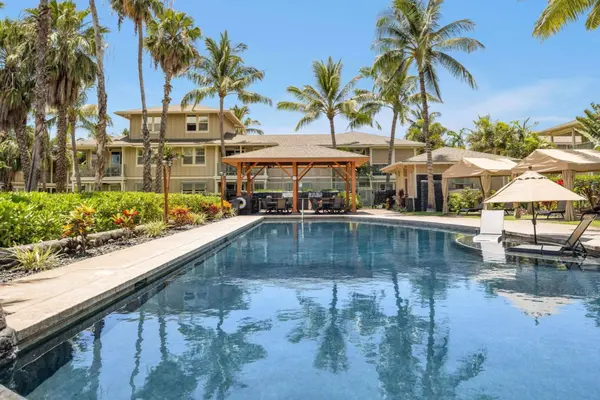
Discover Kai Ani Village: Coastal Living in the Heart of Kihei
Discover Kai Ani Village: Coastal Living in the Heart of Kihei Tucked into the heart of Kihei, Kai Ani Village offers something a little different: a thoughtfully designed residential community with a neighborhood feel, resort-style amenities, and an exceptionally convenient central Kihei location.