
Central Maui delivers something rare in Hawaii luxury real estate: direct oceanfront living at Mā'alaea Bay, private-club golf at King Kamehameha Golf Club, anchored by a landmark clubhouse built from Frank Lloyd Wright's archived designs, and genuine island connectivity, all within the same market. The Maui-wide single-family median was $1,150,000 in July 2026, down 13% year-over-year according to Locations Hawaii, while median days on market fell to 75 days, a faster pace than earlier spring data suggested. Waterfront and golf-course parcels in Wailuku, Kahului, and Mā'alaea command meaningful premiums above the island-wide median, making careful due diligence essential before you commit.
What Makes Central Maui Waterfront & Golf-Course Homes Unique
Central Maui waterfront and golf-course homes are defined by three distinct sub-markets, Mā'alaea Bay oceanfront condos, the Waiehu coastal strip, and golf-course estates near King Kamehameha Golf Club and Maui Lani, each operating on its own supply rhythm, price floor, and ownership structure. Understanding what sets each apart is the first strategic decision a luxury buyer must make.
| Sub-Market | Property Type | Ownership Profile | Club / Water Access | Typical HOA Structure |
|---|---|---|---|---|
| Mā'alaea Bay oceanfront | Condo (AOAO) | Stacked units, thin inventory | Direct bay frontage; no golf | AOAO fees, master insurance |
| Waiehu coastal strip | Single-family on larger lots | Land-owning, more private | Reef-fringed coast; adj. to municipal golf | Minimal to none |
| King Kamehameha Golf Club area | Single-family, estate | Prestige corridor, Waikapū | Private club, separate membership required | Varies by parcel |
| Dunes at Maui Lani | Single-family (gated subdivisions) | Master-planned community | Public course, view access, no inherent play rights | HOA in gated subdivisions |
Mā'alaea Bay oceanfront. The Hauoli Street corridor offers some of the most immediate ocean-to-lanai proximity available in Central Maui. Established complexes sit directly above the bay, upper-floor direct oceanfront units with premium lanai configurations typically price above $1 million, with top-tier penthouse residences reaching into the low-to-mid seven figures. Because Mā'alaea is a small, concentrated community, inventory is thin, a handful of active listings at any given time, so buyers who want a specific exposure or floor level must either act decisively or commit to a monitored waiting strategy. Mā'alaea also sits at the apex between South Maui (Kīhei, Wailea) and West Maui (Lahaina, Kā'anapali), making it one of the most accessible luxury addresses on the island.
Waiehu coastal strip. Running north from Wailuku along Kahekili Highway, the Waiehu Beach Road corridor fronts a rugged, reef-fringed coastline adjacent to Waiehu Municipal Golf Course. Properties here tend to be single-family homes on larger lots, a different ownership profile than the Mā'alaea condo stack, and they appeal to buyers who want land, privacy, and genuine waterfront character without the resort-town pricing of Kā'anapali or Wailea.
Golf-course living: King Kamehameha Golf Club and The Dunes at Maui Lani. King Kamehameha Golf Club, Maui's only private 18-hole course, is perched above Waikapū with panoramic bi-coastal views of both the North Shore and South Maui coastlines. Its clubhouse, completed in May 1993, was designed by architect John Rattenbury of Taliesin Architects, who combined three unbuilt Wright designs from the archives and enlarged them to meet commercial specifications, making it one of the few structures in the world built from Frank Lloyd Wright's unrealized plans. Homes adjacent to the club or within the Waikapū corridor combine architectural prestige with Central Maui's practical infrastructure.
The Dunes at Maui Lani anchors the Maui Lani master-planned community in Kahului. Gated subdivisions including Sandhills Estates surround the course, Sandhills draws buyers seeking luxury single-family homes with HOA stewardship, properties regularly commanding over $1 million, while maintaining proximity to Kahului Airport and the island's primary commercial hub.
Understanding Central Maui's Luxury Market Position
The island-wide market remains in recalibration, but the latest July 2026 numbers show a more nuanced picture than the slower spring data. According to Locations Hawaii's July 2026 Maui Real Estate Report, the Maui-wide single-family median sale price was $1,150,000, down 13% from July 2025. That lower median reflects the mix of properties closing during the month as much as overall value movement, so neighborhood-level comparable sales remain essential for underwriting any specific Central Maui waterfront or golf-course property.
For luxury buyers, the practical takeaway is not that every property is sitting longer. Locations Hawaii reported Maui single-family median days on market at 75 days in July 2026, down from 89 days a year earlier and materially faster than May's 132-day figure. Buyers still have more room to compare options than they did during Maui's 2021–2022 peak, but competitively priced homes are moving faster, leverage now depends on price discipline, property condition, and sub-market depth rather than a blanket assumption that sellers are waiting months for offers. Central Maui specifically tends to trade at a moderate discount to South Maui's Wailea or West Maui's Kā'anapali, reflecting the market's residential rather than resort orientation, a meaningful advantage for buyers prioritizing value-per-square-foot on a luxury footprint.
One characteristic of Central Maui that serious buyers must internalize: the market is not monolithic. Mā'alaea oceanfront condos, Waiehu coastal homes, and golf-course estates near King Kamehameha or Maui Lani operate on different supply rhythms. A shift in condo inventory at one Mā'alaea complex has almost no bearing on the availability of a single-family home backing the Dunes fairway. Treat each sub-market as its own underwriting exercise.
Critical Due Diligence Items for Central Maui Waterfront Buyers
Oceanfront and waterfront purchases in Hawaiʻi require due diligence that goes well beyond the standard home inspection. For luxury buyers considering Mā'alaea Bay or Waiehu Beach Road properties, these items warrant independent expert review before removing contingencies.
Seawall Condition and Coastal Hardening Rules
Have any existing seawall assessed by a coastal engineer during the inspection contingency period. Maui County regulations now restrict repair and replacement of existing coastal hardening structures on many parcels. Many oceanfront complexes along the Mā'alaea corridor were constructed during the 1970s through 1990s, when engineered seawalls were standard. Subsequent research has demonstrated that seawalls can accelerate erosion on adjacent shorelines. Obtain a qualified opinion on the seawall's remaining service life, replacement rights are not guaranteed if the structure fails.
Sea Level Rise Disclosure
Sellers of oceanfront and near-ocean properties in Hawaiʻi are required to disclose sea level rise exposure. The State of Hawaiʻi maintains an interactive Sea Level Rise Viewer that maps properties against multiple projected scenarios, last updated December 2025 by the Hawaiʻi Climate Change Mitigation and Adaptation Commission (Version 1.19). Run any Mā'alaea or Waiehu property through this tool and review the disclosure documentation carefully.
Fee Simple vs. Leasehold Tenure
Verify tenure on every property you seriously consider. Not all luxury-priced properties in Hawaiʻi convey fee simple (full land and improvement) ownership. Some condominiums and residential parcels are structured as leasehold, meaning you own the improvements but lease the underlying land for a fixed term. Leasehold properties typically trade at a discount to fee simple equivalents, financing is more constrained, and expiring leases create substantial resale risk. Fee simple should be the default expectation for a luxury acquisition.
AOAO Financial Health
Before closing on any Mā'alaea condo, obtain at minimum:
-
The current operating budget
-
The reserve study, or most recent reserve account balance relative to the study's funded ratio
-
The master insurance policy declarations page
-
Meeting minutes from the past 24 months
Underfunded reserves in an aging oceanfront building translate directly into special assessments, often six-figure obligations, that land on the new owner after closing.
Insurance Availability and Cost
Obtain binding insurance quotes early in the contingency period. Maui's insurance environment has tightened since the 2023 Lahaina fire. Waterfront properties carry elevated premiums for hurricane coverage (required by most mortgage lenders), and some carriers have restricted new policy issuance in certain coastal zones. Do not wait until after all other contingencies have been released.
Golf-Course Home Buyer Considerations
Golf-course home buyers in Central Maui waterfront and golf-course communities face two distinct scenarios, private-club membership at King Kamehameha or public-course access at The Dunes at Maui Lani, and each demands a different evaluation framework.
King Kamehameha Golf Club is private: membership is a separate transaction from the real estate purchase, with its own initiation and dues structure. Proximity to the course in the Waikapū corridor does not automatically convey any membership rights. Confirm membership availability and current fee schedules with the club directly before assuming the lifestyle. The clubhouse itself, designed by John Rattenbury of Taliesin Architects from Wright's archived unbuilt plans, is a legitimate architectural draw, but it is not a substitute for confirming your access to the course.
The Dunes at Maui Lani is a public course, meaning golf-course-view homeowners in the Maui Lani subdivisions have visual access to the fairways but no inherent playing privileges. The lifestyle appeal is the green-space aesthetic, the walkable community, and Central Maui's practical infrastructure, not private-club exclusivity. Both value propositions are legitimate, they serve different buyer priorities.
Regardless of course type, physically walk the property boundary relative to the fairways. Golf-course-adjacent homes carry the risk of errant shots, noise during early morning tee times, and maintenance equipment operating at the perimeter. On a property you are evaluating above $1 million, a personal site visit during a typical weekend morning tee time is a reasonable due diligence step.
Ownership Costs Beyond the Purchase Price
Central Maui luxury buyers should model the following ongoing costs before committing to a price point.
Property Taxes (FY2026–27)
Maui County property taxes effective July 1, 2026 (per Maui County Resolution No. 26-69) are structured on a tiered basis:
| Classification | Tier 1 | Tier 2 | Tier 3 |
|---|---|---|---|
| Owner-Occupied | $1.65 / $1,000 (up to $1.5M) | $1.80 / $1,000 ($1.5M–$4.5M) | $5.00 / $1,000 (above $4.5M) |
| Non-Owner-Occupied | $6.25 / $1,000 (up to $1M) | $9.00 / $1,000 ($1M–$2.5M) | $17.00 / $1,000 (above $2.5M) |
These owner-occupied rates are among the lowest in the country for a luxury market. Non-owner-occupied properties, including second homes held without the homeowner exemption, are taxed at materially higher rates, so buyers who do not intend to claim the exemption should budget accordingly. The Hawaii State Conveyance Tax, applied at transfer, ranges from 0.1% to 1.25% of the purchase price and scales upward for higher-value transactions.
HOA and AOAO Fees
Central Maui condo AOAO fees vary widely by building age and reserve fund status. For golf-course communities in Maui Lani, HOA fees in gated subdivisions such as Sandhills Estates add a separate cost layer on top of property taxes. Request current AOAO disclosure documents for any specific property to establish an accurate figure.
Maintenance
Hawaii's salt-air and UV environment accelerates the wear cycle on exterior finishes, roofing membranes, HVAC systems, and lanai structures. Reserve 1–2% of property value annually for maintenance, more for direct oceanfront properties where corrosion exposure is highest.
Working with a Local Buyer's Agent
A dedicated buyer's agent provides the most consequential advantage in Central Maui's narrow luxury sub-market: off-market access and Hawaii-specific due diligence expertise, at no out-of-pocket cost to the buyer in a standard Hawaii transaction.
With Maui single-family median days on market at 75 days in July 2026, well-priced homes are moving meaningfully faster than the May data implied. The window to identify and negotiate on high-quality properties still exists, but it is narrower and more property-specific than a broad buyer's-market reading would suggest. The right agent brings access to pre-market intelligence, experienced guidance on Hawaii-specific contract contingencies, and the due diligence network, inspectors, coastal engineers, insurance specialists, escrow officers, that a complex luxury transaction requires.
Use the affordability calculator and mortgage calculator as starting points for your financial modeling before engaging lenders. When you are ready to review active inventory, current Central Maui listings provide a current view of what is on the market across all sub-markets.
FAQ: Central Maui Waterfront & Golf-Course Homes
-
What is the price range for luxury waterfront condos in Mā'alaea?
Upper-floor direct oceanfront units with premium lanai configurations at established complexes typically price above $1 million, with top-tier penthouse residences reaching into the low-to-mid seven figures. Pricing is highly unit-specific: floor level, building orientation, view angle, and AOAO financial health all move the needle materially. Because inventory is thin at any given time, monitoring available units over several months often gives a clearer picture of realistic asking prices than any single snapshot.
-
Do I need a golf club membership to live in a Central Maui golf-course community?
No, real estate in neighborhoods adjacent to King Kamehameha Golf Club or The Dunes at Maui Lani does not require or include club membership. Membership at King Kamehameha (a private club) is a separate application and fee process. The Dunes at Maui Lani is a public course accessible to residents and non-residents alike. Buyers drawn primarily by the open fairway aesthetic and community infrastructure, rather than regular play access, will find the Maui Lani subdivisions particularly well-suited to their priorities.
-
What are the biggest risks in buying a Central Maui oceanfront property?
The three most material risks are: (1) seawall condition and the regulatory constraints on future coastal hardening repairs, (2) AOAO reserve fund adequacy, a severely underfunded reserve in an aging oceanfront building is effectively a deferred special assessment waiting to be issued, and (3) insurance availability and cost, which has become more complex across Maui following the 2023 Lahaina fire. All three can be quantified during the inspection and due diligence contingency period if you engage the right specialists.
-
How does the Maui County homeowner exemption affect luxury property taxes?
Owner-occupants who qualify for the Maui County homeowner exemption receive a $300,000 reduction in net taxable assessed value, applied before the tiered rate calculation. A separate long-term rental exemption, $200,000, applies to qualifying rental properties and is a distinct program. On a $2 million assessed property, the $300,000 homeowner exemption produces a meaningful annual reduction in tax liability. The exemption must be applied for through the Maui County Department of Finance, non-owner-occupied properties, including second homes held without the exemption, are taxed at significantly higher non-owner-occupied rates.
-
Is Central Maui a good long-term investment for luxury buyers?
Central Maui waterfront and golf-course properties occupy a relatively supply-constrained niche, the Mā'alaea oceanfront corridor is physically bounded, and golf-course-adjacent single-family inventory in Maui Lani is limited by the built-out master plan. Supply constraints are a long-term support factor. Maui's luxury market went through a meaningful pricing correction from its 2021–2022 peak, and buyers who purchase with a long time horizon at current market levels are better positioned than those seeking short-term appreciation. The lifestyle component, year-round climate, bi-coastal access, cultural depth, remains among the strongest non-financial holding motivators in U.S. luxury real estate.
FROM OUR BLOG
Discover Kai Ani Village: Coastal Living in the Heart of Kihei
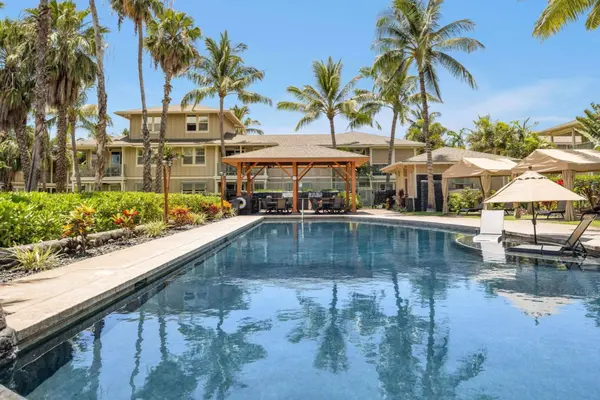
Discover Kai Ani Village: Coastal Living in the Heart of Kihei Tucked into the heart of Kihei, Kai Ani Village offers something a little different: a thoughtfully designed residential community with a neighborhood feel, resort-style amenities, and an exceptionally convenient central Kihei location.

Relocating to Maui vs Vacationing in Maui: Key Differences Buyers Should Know
Vacationing in Maui has a way of quietly reshaping what you think everyday life could feel like. The light, the water, the pace of things. It's easy to start doing the math in your head between cocktails at a Wailea beach bar. But relocating to Maui is a fundamentally different commitment, one that
Moving to Central Maui: What to Know Before You Buy
Central Maui, anchored by Kahului, Wailuku, and the tucked-away harbor village of Maʻalaea, is the island's most practical and underrated place to put down permanent roots. Single-family homes here typically trade at a meaningful discount to Maui's resort coasts, meaning buyers gain real square foot