
When evaluating the Best South Maui Property Types for Second-Home and Investment Buyers, understanding how South Maui's four submarkets (Kihei, Wailea, Makena, and Maui Meadows) serve distinct purposes is critical, as matching the wrong asset type to ownership goals is a costly error. Three variables determine which property type belongs in a portfolio: zoning tolerance, intended use (personal versus income-generating), and target price tier. This guide maps every major property type across those variables so asset selection aligns with strategy before writing an offer.
Why South Maui Property Types for Second-Home and Investment Buyers Require a Different Framework
In South Maui, zoning classification determines whether a property can legally generate short-term rental income, making it the primary variable every second-home and investment buyer must resolve before evaluating any specific asset.
South Maui is four micro-markets stacked in ascending order of exclusivity, each rewarding a different ownership profile.
Maui County Ordinance 5909 (Bill 9), signed into law on December 15, 2025, phases out transient vacation rental (TVR) use in apartment-zoned districts on a defined timeline: apartment-zoned units in the West Maui Community Plan area must cease TVR operations by January 1, 2029, and all remaining apartment-zoned units across Maui County by January 1, 2031. Properties in hotel or resort zones are unaffected and remain fully TVR-eligible.
On June 19, 2026, the Maui County Council passed Bill 88 (7-2 vote), which became Ordinance 6008, effective June 22, 2026. Ordinance 6008 creates two new hotel zoning designations (H-3 and H-4) that establish a potential rezoning pathway for certain apartment-zoned properties currently operating as STRs under the Minatoya List. This is not an automatic exemption, as each building must complete Planning Commission review and County Council approval individually. As of August 2026, the first batch of properties under Resolutions 26-110 and 26-111 has advanced to the Planning Commission. The STR regulatory landscape remains actively evolving, and buyers should independently verify the current rezoning status of any specific property with the Maui County Department of Planning before making acquisition decisions.
This single legislative reality and its ongoing development has divided the South Maui condo market into investment theses with materially different risk profiles: hotel/resort-zoned assets with established STR eligibility, apartment-zoned assets potentially eligible for H-3/H-4 rezoning, and apartment-zoned assets with no viable STR path under either ordinance.
The Realtors Association of Maui reported a Wailea/Makena median condo sales price of $2,850,000 in Q1 2025, recalibrating to $1,975,000 in Q1 2026 (or $1,985,000 across broader YTD tracking) as volume recovered with 28 closed transactions in Q1 2026 up 16.7 percent year over year. These figures illustrate the range within which South Maui luxury condos trade, underscoring why understanding which property type serves specific goals is the starting point for every serious buyer conversation.
Hotel-Zoned Luxury Condos in Wailea: The STR-Eligible Premium Tier
Hotel-zoned and resort-zoned condominiums in Wailea are the main South Maui condo category with a legally established short-term rental classification under Ordinance 5909, remaining the clearest STR pathway in the submarket regardless of Bill 88 outcomes.
Wailea was master-planned as a resort district, and the majority of its condo communities were built within hotel or resort zoning designations. Communities such as Wailea Ekahi, Wailea Ekolu, Wailea Elua, Wailea Beach Villas, Grand Champions, and Hoʻolei sit within this framework, and many participate in active on-site rental management programs. The lifestyle infrastructure (five-star resort hotels, championship golf courses, high-end retail, and the oceanfront boardwalk linking Ulua, Wailea, Mokapu, and Polo beaches) generates consistent demand from high-spending visitors.
Realtors Association of Maui data for Q1 2026 placed the Wailea/Makena condo market at a median of $1,975,000 ($1,985,000 YTD through March 2026), down from $2,850,000 in Q1 2025. That recalibration reflects increased transaction volume as buyers re-engaged at adjusted prices rather than a collapse in demand. The Q1 2026 benchmark is the primary pricing standard for buyers underwriting acquisitions in this segment today.
For STR income modeling, a well-positioned one- to two-bedroom Wailea resort condo has generated gross annual revenue in the range of $80,000 to $140,000 based on aggregated short-term rental performance data for the twelve months ending June 30, 2026. However, buyers need to account for Hawaii's full operating cost stack before projecting net returns: the combined General Excise Tax (4.5 percent), State Transient Accommodations Tax (11 percent), and Maui County TAT surcharge (3 percent) total 18.5 percent of gross revenue, assessed before deducting operating expenses. Property management on Maui typically runs 25 to 35 percent of gross revenue. Wailea resort-grade HOA fees often range from $2,500 to $5,000+ per month.
At current purchase prices and prevailing interest rates, most Wailea STR condos do not generate positive cash flow with conventional financing. The investment thesis here is long-term appreciation, personal use value, and lifestyle equity rather than day-one yield.
A primary due diligence priority is confirming a specific unit's zoning classification and association rental rules before assuming STR eligibility. Even within a hotel-zoned complex, individual association rules can impose minimum rental periods or restrict participation in certain management programs.
Community detail on the resort district is available through our Wailea property portfolio and luxury market guide.
Makena Beachfront Condominiums: Scarcity, Privacy, and STR Flexibility at the Luxury Ceiling
Makena is the most supply-constrained submarket in South Maui, where structural scarcity functions as a primary value driver.
According to the Maui County South Maui Community Plan, Subarea 5 (Mākena) spans roughly 3,390 acres yet contains only approximately 140 housing units. That structural scarcity anchors the pricing ceiling of the entire South Maui corridor. Realtors Association of Maui data reported a Wailea/Makena median single-family sales price of $10,685,000 in Q1 2025; by the seven months ending July 2026, that combined Wailea/Makena single-family median settled to $2,780,000 year-to-date. This reflects the wide spread between Makena's entry and trophy tiers across extended periods, along with the low transaction count inherent in an exclusive market.
Three established communities define the Makena buyer's landscape:
| Community | Units | STR Permitted | Typical Price Range (Recent MLS Data) | HOA (approx.) |
|---|---|---|---|---|
| Makena Surf | 107 | Yes | $3.9M–$4.2M (typical 2BR); $9.0M single outlier (3/2026) | ~$2,400–$6,100/mo |
| Polo Beach Club | 71 | Yes | ~$4.6M–$5.2M | ~$1,950–$2,000/mo |
| Na Hale O Makena | ~50 | No | ~$2.1M–$2.95M | ~$1,200–$1,500/mo |
Makena Surf is the flagship beachfront community (107 units across oceanfront acreage on Poʻolenalena Beach, with pools, hot tubs, tennis and pickleball courts, and 24-hour security). STR use is permitted. Aggregated MLS data for the twelve months ending July 2026 shows a median sales price of approximately $4,075,000 for typical two-bedroom units. A single three-bedroom penthouse-format unit closed in the $9,000,000 range in early 2026 (alongside an ultra-luxury $12.3M sale at Makena Beach Club), representing outliers that illustrate the ceiling within the submarket rather than typical unit pricing. With so few annual transactions (averaging roughly two to three per year), buyers should evaluate specific floor plan and building comparables rather than relying solely on community-level statistics.
Polo Beach Club offers a compact beachfront option with direct access to Polo Beach and STR flexibility. Recent aggregated MLS data shows comparable two-bedroom unit sales in the $4.6 to $5.2 million range.
Na Hale O Makena serves the buyer who wants a Makena address and generous floor plans (two- to four-bedroom layouts in a 6-acre setting with pool and fitness amenities) without the beachfront premium or the STR operating model. Short-term vacation rental use is not permitted here. This community draws buyers whose primary motivation is personal use and long-term appreciation rather than rental income.
The Makena estate and vacant-land market operates at a different scale entirely. Large parcels within private coastal enclaves have transacted at multi-million-dollar figures even as raw land, with HOA obligations beginning at closing regardless of construction status.
Current inventory and neighborhood context can be evaluated in our Makena real estate and coastal inventory overview.
Kihei Vacation Condominiums: South Maui's Active Market for Luxury STR and Long-Term Rental Assets
For luxury buyers, Kihei's most relevant inventory sits in the hotel-zoned and resort-zoned mid-tier segment: condominiums broadly in the $900,000 to $1,800,000 range that combine STR legal certainty with a lower capital outlay than Wailea's resort communities require.
Kihei is South Maui's highest-transaction submarket, and Ordinance 5909 has sharpened the distinction between its condo tiers. Hotel-zoned and resort-zoned condominiums remain fully STR-eligible and represent the legally established entry point into the short-term rental market. Aggregated MLS listing data for 2026 shows the STR-eligible segment broadly in the $900,000 to $1,800,000 range, offering a discount to Wailea resort pricing for buyers whose strategy prioritizes STR income over resort-community amenities.
Some apartment-zoned Kihei condominiums are included in initial Resolutions 26-110 and 26-111 under Bill 88's H-3/H-4 rezoning process. However, the outcome of that process remains uncertain and building-specific. Buyers should not acquire apartment-zoned units with STR income as the primary thesis unless they have independently confirmed the specific property's eligibility and progress within the rezoning process.
Gross annual revenue for a well-positioned one-bedroom Kihei STR condo has run in the $40,000 to $70,000 range based on aggregated short-term rental performance data for the twelve months ending June 30, 2026, though results vary materially by complex reputation, ocean proximity, and management quality.
Realtors Association of Maui data showed a Kihei condo median of $650,000 in November 2025, a figure reflecting the small sample sizes and mixed-tier inventory of a single-month snapshot. Buyers focused on the STR-eligible luxury tier should evaluate that specific segment's pricing rather than the broader Kihei condo median.
Maui Meadows Single-Family Homes: Luxury Privacy Above the Resort Corridor
Maui Meadows delivers what no resort community in South Maui can: large-lot, custom single-family ownership above Wailea with no homeowners association, panoramic ocean views, and complete design autonomy.
The neighborhood was established in the 1970s on the hillside directly above Wailea, close enough to access regional beaches, golf courses, and dining, yet far enough removed to feel like a private retreat. The absence of an HOA gives buyers the freedom to design, renovate, or expand without committee approval. Lots average half an acre or more, with custom homes ranging from original ranch-style builds to contemporary ocean-view estates commanding sweeping views of Molokini, Kahoʻolawe, and the Pacific.
Aggregated MLS listing data for the three months ending August 2026 shows active Maui Meadows inventory ranging broadly from approximately $1.7 million at the entry level to $4.5 million for larger five-bedroom estates. This positions the neighborhood as a luxury single-family alternative occupying the gap between Kihei's mid-market and Wailea's ultra-premium estate segment.
For second-home buyers who want the South Maui lifestyle without HOA structures or resort-complex rules, Maui Meadows offers a distinct ownership experience. Vacation rental eligibility in this community is limited, as the neighborhood's residential character is one of its defining features, so buyers should verify any rental intentions against current county zoning before purchasing. Most buyers here acquire for personal use, legacy ownership, or long-term appreciation rather than STR income.
South Maui Property Types for Investment Buyers: Matching Asset to Strategy
The clearest framework for aligning property type to investment objective in South Maui is a three-scenario model:
| Scenario | Best-Fit Asset Type | Core Rationale |
|---|---|---|
| STR income essential to hold cost | Hotel/resort-zoned condos: Wailea resort communities, Makena Surf, Polo Beach Club | Established legal STR classification; unaffected by Ordinance 5909 phase-out timeline; shrinking supply of eligible assets argues for a scarcity premium |
| Hybrid: personal use + occasional income | Mid-tier Wailea resort condos; hotel-zoned Kihei condos ($900K–$1.8M) | STR flexibility without full Makena pricing; allows personal use during peak personal periods and rental revenue during high-demand visitor seasons |
| Appreciation and lifestyle value as primary thesis | Maui Meadows SFH; Makena estate tier; Na Hale O Makena | Limited supply, persistent luxury demand, land control, no HOA, insulating long-term holders from STR regulatory volatility |
For buyers pursuing the hybrid model, consulting a qualified Hawaii tax accountant before closing clarifies IRS deductibility rules for mixed personal and rental use.
Property taxes in Maui County are assessed by use classification, and investment and vacation rental properties are taxed at significantly higher rates than owner-occupied primary residences. For reference, the FY 2026–2027 rates per the Maui County Real Property Tax schedule include $11.80 per $1,000 for Hotel and Resort properties, $13.00 to $17.00 per $1,000 for TVR/Short-Term Rental Homes (tiered by value), and $2.90 to $8.50 per $1,000 for Long-Term Rental properties, compared with $1.65 to $5.00 per $1,000 for owner-occupied residential properties. Confirming the current classification of any target property with Maui County Real Property before an offer is finalized is crucial, as the classification materially affects annual carrying costs.
The Ownership Cost Reality Every South Maui Luxury Buyer Should Understand
South Maui luxury property carries a cost structure that differs materially from mainland second-home ownership. Understanding the major cost categories beyond mortgage service prevents surprises down the road:
-
HOA / AOAO fees: $800 to $1,200 per month for entry Kihei units up to $2,500 to $5,000+ per month for Wailea luxury resort complexes. Requesting the current reserve study and recent meeting minutes helps assess special assessment risks, as coastal weather accelerates building wear.
-
Property insurance: Since the 2023 Lahaina fire, the local insurance market has tightened considerably. Requesting quotes early in due diligence avoids closing delays.
-
Property management: Professional management on Maui typically costs 25 to 35 percent of gross rental revenue.
-
Hawaii rental taxes: Combined General Excise Tax (4.5 percent), State Transient Accommodations Tax (11 percent), and Maui County TAT Surcharge (3 percent) total an 18.5 percent tax stack, assessed on every dollar of gross income before operating expenses are deducted.
-
Maintenance reserve: Budgeting 1 to 2 percent of property value annually addresses maintenance demands created by coastal humidity and salt air.
South Maui's second-home and investment properties reward buyers who align asset selection with a clear ownership thesis before beginning their search. The regulatory landscape shaped by Ordinance 5909 and Ordinance 6008 (Bill 88) makes zoning classification the primary filter. Pairing that filter with an assessment of holding costs, intended use, and target price tier converts asset selection into an informed strategy.
Looking at Places in South Maui?
Choosing between an oceanfront condo in Wailea, a quiet estate in Makena, or a hillside home in Maui Meadows really comes down to how you plan to use the home and what kind of setup fits your lifestyle. When you are ready to compare neighborhoods, check zoning details, or walk through realistic ownership costs, feel free to search active listings or connect with Jyoti Graziano for local insight on your own timeline.
Frequently Asked Questions: South Maui Property Types for Second-Home and Investment Buyers
What is the difference between hotel-zoned and apartment-zoned condos in South Maui?
Hotel-zoned and resort-zoned condominiums are legally permitted to operate as short-term vacation rentals (30 days or fewer) under Maui County zoning rules. Apartment-zoned condominiums have historically operated under specific exceptions, but Maui County Ordinance 5909 phases out TVR use in apartment-zoned districts by January 1, 2029 in West Maui and January 1, 2031 island-wide. Ordinance 6008 (Bill 88), effective June 22, 2026, creates new H-3 and H-4 hotel zoning designations that establish a potential rezoning pathway for eligible apartment-zoned properties. However, rezoning is not automatic and requires a building-by-building application, Planning Commission review, and County Council approval. Hotel or resort zoning remains the classification with fully established legal durability for short-term rental operations.
Do I need a local lender to finance a Maui vacation condo?
For hotel-zoned condotels and STR-eligible condominiums, working with a local Hawaii lender familiar with the Maui market is strongly recommended. Out-of-state lenders frequently classify Maui's resort condos as non-warrantable, which can result in loan denials mid-transaction. A lender who understands which complexes are financeable, what down payment each property type requires, and how to structure a condotel loan reduces transaction risk substantially.
What are the tax obligations for short-term rental income in Hawaii?
Short-term rental income in Hawaii is subject to three taxes: General Excise Tax (4.5 percent of gross revenue, including the Maui County surcharge), State Transient Accommodations Tax (11 percent), and the Maui County Transient Accommodations Tax surcharge (3 percent). Combined, these total 18.5 percent of gross rental revenue, assessed before any operating expenses. Additionally, non-Hawaii-resident sellers face HARPTA withholding (7.25 percent of sale price at closing) and foreign sellers face FIRPTA withholding (15 percent).
Is Maui Meadows a good option for second-home buyers who are not interested in vacation rentals?
Yes. Maui Meadows offers custom single-family homes on half-acre or larger lots above Wailea with panoramic ocean views, no HOA restrictions, and a quiet residential character. It is well suited to buyers who want South Maui's lifestyle and long-term appreciation without the HOA structure, rental management complexity, or regulatory exposure of the resort condo market. Because vacation rental eligibility in this neighborhood is limited, acquisitions here should be driven by personal use rather than rental income.
How does Makena differ from Wailea for luxury condo buyers?
Wailea is a larger resort district with a wider selection of condo communities, resort amenities, and active rental management programs. Makena has far fewer housing units (roughly 140 in total across the entire subarea), which creates a structural scarcity premium. Makena's three established condo communities serve distinct buyer profiles: Makena Surf and Polo Beach Club for buyers seeking beachfront position and STR flexibility, and Na Hale O Makena for buyers seeking a residential Makena ownership experience without short-term rental operations.
What critical items should be verified before making an offer on a South Maui investment property?
Due diligence should cover five essential areas: zoning classification and current legal status under Ordinance 5909 or Ordinance 6008; association rental rules, financial reserves, and special assessment history; current Maui County property tax classification and tax rate; early insurance binding quotes given recent market shifts; and specialized lender approval for condotel or resort structures. Confirming these details during initial evaluations ensures a secure acquisition process.
FROM OUR BLOG

Central Maui Waterfront & Golf-Course Homes: Buyer's Guide
Central Maui delivers something rare in Hawaii luxury real estate: direct oceanfront living at Mā'alaea Bay, private-club golf at King Kamehameha Golf Club, anchored by a landmark clubhouse built from Frank Lloyd Wright's archived designs, and genuine island connectivity, all within the same market.
Central Maui Trails, Parks & Outdoor Recreation
Central Maui doesn't get talked about the way South Maui or West Maui do, and honestly, that's part of its appeal. Kahului, Wailuku, and Māʻalaea sit inside one of the most trail-rich, ecologically diverse pockets of the island, and for the people who live there, that access isn't a weekend plan. It
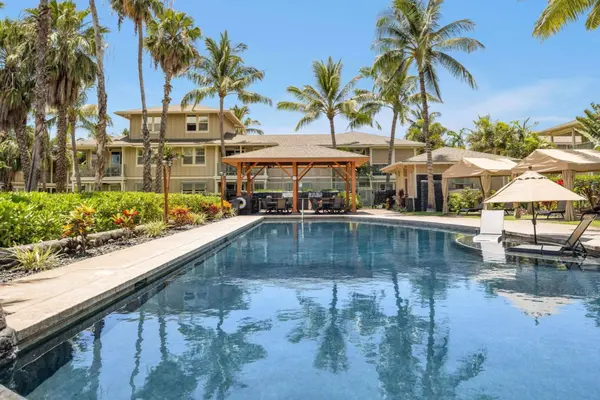
Discover Kai Ani Village: Coastal Living in the Heart of Kihei
Discover Kai Ani Village: Coastal Living in the Heart of Kihei Tucked into the heart of Kihei, Kai Ani Village offers something a little different: a thoughtfully designed residential community with a neighborhood feel, resort-style amenities, and an exceptionally convenient central Kihei location.