
Kihei and Wailea are not two versions of the same thing. They are fundamentally different ownership propositions separated by roughly three miles of South Maui coastline. Kihei is a high-demand coastal community where upper-tier condominiums offer compelling value relative to Wailea resort pricing. Wailea is a master-planned luxury enclave where single-family home medians ran at $2,780,000 year-to-date through July 2026, according to REALTORS® Association of Maui housing statistics. If you are comparing the two, the gap in price, amenity standard, and regulatory exposure tells you most of what you need to know before you ever tour a unit.
The Core Price Divide Between Kihei and Wailea
Kihei single-family homes posted a $1,225,000 year-to-date median through July 2026, while Wailea and Makena came in at $2,780,000. This reflects a spread of more than $1.55 million at the midpoint, according to the REALTORS® Association of Maui. That differential reflects more than lot size: it reflects zoning, amenity infrastructure, and the resort positioning that Wailea has commanded for decades.
The condo market shows a comparable divergence. As of June 2025, Kihei recorded a median condo price of $780,000 while Wailea and Makena came in at $2.16 million, per REALTORS® Association of Maui data for that period. More recent figures from late 2025 showed Kihei condo medians adjusting to $650,000 as broader market softening, driven in part by regulatory uncertainty around vacation-rental zoning, continued to apply downward pressure on apartment-zoned inventory. Wailea year-to-date condo medians held above $2 million through the same period, demonstrating the durability of the luxury segment even as volume contracted.
For buyers and investors calibrating an acquisition strategy, the practical implication is clear. Kihei offers a range of entry points across a deeper inventory pool, including luxury-caliber properties with strong yield potential. Wailea concentrates value in fewer, higher-priced assets with resort-quality amenities and historically durable fundamentals.
| Community | Kihei | Wailea / Makena |
|---|---|---|
| Single-family median (YTD July 2026) | $1,225,000 | $2,780,000 |
| Condo median (as of June 2025) | $780,000 | $2,160,000 |
| Condo median (as of November 2025) | $650,000 | Above $2,000,000 |
Source: REALTORS® Association of Maui
Active listings for both communities are available on the Kihei neighborhood listings and Wailea neighborhood listings pages.
Lifestyle Differences: What Daily Life Actually Looks Like in Kihei vs Wailea
Kihei and Wailea differ not just in price but in the texture of daily life, and for luxury buyers, that distinction shapes ownership satisfaction more than any individual amenity.
Kihei is a vibrant coastal community with a strong owner-occupant and investor base. South Kihei Road runs the length of the community, putting grocers, restaurants, and public beach parks within easy reach of many condo complexes. The three Kamaole Beach Parks, each staffed by lifeguards daily, give residents and guests reliable beach access with dedicated parking. For buyers seeking luxury properties in a less structured, more authentic Hawaiian environment, Kihei upper-tier inventory delivers on that combination without the resort-community premium.
Wailea is a master-planned resort community designed around a curated ownership experience. The Wailea Beach Path, an approximately 1.6-mile paved coastal walkway, connects the area's major hotels, restaurants, and crescent beaches (Mokapu, Ulua, Wailea, and Polo) in a single uninterrupted circuit. Dining is resort-driven, golf is anchored by three championship courses, and the overall environment is quiet, manicured, and unhurried. There are no full-size grocery stores in Wailea. Residents typically drive into Kihei for weekly runs, a detail that matters for full-time owners and extended-stay guests alike.
In summary, Kihei suits buyers who want luxury-caliber properties with strong location fundamentals and greater yield flexibility in a local coastal setting. Wailea suits buyers for whom the resort atmosphere and premium amenity package (on-site service, golf, and a managed aesthetic) are central to the ownership vision and justify both the price premium and a more car-dependent daily routine for errands.
HOA Fees and Total Ownership Cost in Kihei vs Wailea
Wailea resort buildings typically carry monthly HOA fees several times higher than comparable Kihei condominiums, reflecting the staffed-entry, multi-pool service level that defines resort-community ownership. Entry price is only part of the ownership equation in South Maui. Monthly carrying costs vary significantly by building type and location, and the gap between the two communities is substantial.
| Building type | Estimated monthly HOA | Service level |
|---|---|---|
| Kihei (Boutique Low-Rise) | Entry-level of the luxury range | Pool, well-maintained common elements |
| Kihei (Resort Corridor) | Mid-range | Pool, fitness room, professional management |
| Wailea (Full-Service Resort) | Mid- to upper-four-digit range | Staffed entry, multiple pools, concierge |
| Wailea Premier / Makena | At the top of the range | 24-hour security, poolside service, full management |
Representative ranges by building type and service level. Always verify current dues with each association before submitting an offer.
The governing principle is that fees track the service level. A Wailea resort community with 24-hour security, poolside service, and a dedicated management team costs more to operate than a Kihei boutique complex, and that cost flows directly to owners. Before comparing two properties on purchase price alone, model the full annual carrying cost: HOA dues, property taxes, insurance, utilities, and any management or cleaning fees, against realistic income or personal-use assumptions.
On insurance specifically, Maui property insurance market rules have tightened considerably. Review the association master policy, its deductible structure, and the reserve study before committing. Buildings with well-funded reserves and recent capital improvements may carry higher dues but present lower risk of special assessments. Using an online mortgage calculator or affordability calculator can help you pressure-test your numbers against total monthly cost rather than just purchase price.
The Short-Term Rental Landscape: What Ordinance 5909 and Ordinance 6008 Mean
Regulatory clarity on vacation-rental rights is one of the most consequential factors separating Kihei condos from Wailea resort units, and it has materially repriced the market since late 2025.
What happened under Ordinance 5909: Maui County enacted Maui County Ordinance 5909 (Bill 9) in December 2025. It phases out transient vacation rental use in apartment-zoned (A-1 and A-2) districts across the county, specifically targeting properties operating under a decades-old county interpretation known as the Minatoya List. For South Maui, the phase-out deadline is January 1, 2031, meaning affected properties can continue operating as short-term rentals through December 31, 2030.
What it does not touch: Hotel-zoned and resort-zoned properties retain their short-term rental rights by right. In Wailea, established resort-zoned buildings are unaffected by Ordinance 5909 phase-out rules. Permitted short-term rental homes and bed-and-breakfast homes with valid county permits are also excluded.
The rezoning framework under Ordinance 6008: Bill 88, passed by the County Council in June 2026 by a 7–2 vote and enacted as Ordinance 6008, created two hotel zoning districts: H-3 (low-density) and H-4 (medium-density). These are designed to allow eligible apartment-zoned properties to reclassify and preserve short-term rental rights permanently. Ordinance 6008 does not rezone any property automatically; each building must go through a separate rezoning process via County Council resolutions or private HOA applications.
Where the pipeline stands as of mid-August 2026: The Council initiated the first wave of rezonings via Resolutions 26-110 and 26-111, which cover approximately 35 to 40 complexes (more than 2,000 units) and referred them to the Maui Planning Commission for formal public hearings. A second wave covering additional properties under Resolutions 26-129 and 26-130, focused on specific policy filters including coastal exposure, remains under active committee review.
The practical buyer implication: Apartment-zoned Minatoya List condos in Kihei often trade at a pricing discount that reflects regulatory transition, which can represent an opportunity for buyers whose primary intent is personal enjoyment or long-term rental. For buyers focused on durable short-term rental income, Wailea hotel-zoned resort inventory carries firmer justification post-Ordinance 5909 because the rental right is permanent rather than on a phase-out timeline. The Hawaii state Transient Accommodations Tax (TAT) stands at 11 percent, adding to the cost of nightly rental operations. Any net-yield model should incorporate current TAT rates alongside county rules, management fees, and each building's specific position in the Ordinance 6008 rezoning process. Verifying zoning status before submitting an offer is the single most important due-diligence step in the South Maui condo market.
Beach Access and Location: Kihei vs Wailea
Kihei offers lifeguarded beaches with dedicated public parking. Wailea crescent beaches are equally accessible by law but have no lifeguard towers and limited lot space in peak season, a meaningful distinction for owners with children or guests unfamiliar with ocean conditions.
Both communities front the same calm, sun-drenched stretch of South Maui leeward coast, and every beach in Hawaii is public by law. Kihei advantage lies in infrastructure: dedicated parking lots, daily lifeguard coverage at Kamaole Beach Parks I, II, and III from approximately 8:00 a.m. to 4:30 p.m., and multiple entry points spread along several miles of shoreline.
Wailea beaches (Mokapu, Ulua, Wailea, and Polo) are crescent bays framed by resort landscaping. Public access paths and small free lots exist at each, though lots fill quickly during peak hours. The Wailea Beach Path links all four beaches and adjacent resort properties in a manicured walking route that is one of the distinctive features of the area.
South of Wailea, Makena extends the coastline with Oneloa (Big Beach), a broad stretch of sand at Mākena State Park that contrasts with Wailea resort beaches and provides a dramatic natural beach setting.
Who Should Choose Kihei, and Who Should Choose Wailea?
Kihei and Wailea each suit a distinct ownership profile. The clearest way to choose between them is to match the property type to your primary use case, income strategy, and risk tolerance in the current regulatory environment.
Kihei fits buyers who:
-
Are seeking luxury-caliber properties with stronger yield potential in a less regulatory-constrained environment.
-
Value an authentic Hawaiian coastal setting alongside high-quality finishes and location fundamentals.
-
Are comfortable navigating the Ordinance 5909 regulatory landscape as part of a disciplined acquisition strategy.
-
Plan to use the property primarily for personal enjoyment or long-term rental, treating short-term rental income as a secondary consideration post-rezoning.
Wailea fits buyers who:
-
Are seeking resort-grade finishes, comprehensive on-site amenities, and a high-service ownership environment.
-
Want durable short-term rental rights in hotel- or resort-zoned buildings without phase-out exposure.
-
Prefer a lock-and-leave ownership model with on-site staffing and concierge-level maintenance.
-
Are purchasing a primary luxury second home where the resort setting (golf, spa, fine dining) is central to the ownership vision.
The distinction is not about which area is objectively superior. It is about which ownership model matches your lifestyle expectations, income strategy, and risk tolerance in the current regulatory environment.
Matching the Right South Maui Community to Your Ownership Goals
The Kihei vs Wailea decision ultimately comes down to two ownership philosophies. Wailea delivers the complete luxury resort experience in South Maui: controlled environment, durable rental rights, and amenities that require no compromise. Kihei, at its upper tier, offers a different kind of luxury: relative value, a dynamic coastal community, and upside for buyers who can assess the regulatory landscape with precision.
Both communities sit within one of the most sought-after stretches of coastline in the Pacific. The right choice between them is the one that aligns your capital with your intended use, and that evaluation requires knowing exactly what each building zoning status, reserve health, and HOA structure look like before an offer is made. For buyers ready to work through that analysis on a specific property, reviewing our full list of Maui vacation condominiums across both communities is a practical starting point for understanding what is currently available at each tier.
FAQ: Kihei vs Wailea for South Maui Buyers
- What is the price difference between Kihei and Wailea real estate?
The REALTORS® Association of Maui reports year-to-date medians through July 2026 of $1,225,000 for Kihei single-family homes and $2,780,000 for Wailea and Makena single-family homes, a gap of more than $1.55 million at the midpoint. The condo market reflects a similar divergence, with Kihei median running substantially below Wailea, which held above $2 million on a year-to-date basis.
- Are short-term rentals still legal in Kihei condos?
Many Kihei condos in apartment-zoned (A-1 and A-2) buildings that operated under the Minatoya List grandfather clause are still legally renting short-term under a phase-out timeline. Ordinance 5909 (Bill 9), signed in December 2025, requires those properties to cease transient vacation rental operations by January 1, 2031 in South Maui, unless they successfully rezone into one of the new hotel districts (H-3 or H-4) under Ordinance 6008. Hotel-zoned and resort-zoned buildings retain short-term rental rights without a phase-out deadline.
- Do Wailea condos have higher HOA fees than Kihei?
Generally, yes. Full-service resort buildings in Wailea with staffed entries, multiple pools, and extensive common elements carry significantly higher monthly HOA fees than most Kihei buildings. The right comparison is not purchase price alone but total annual carrying cost, including dues, taxes, insurance, and maintenance, modeled against your projected use and income assumptions.
- What documents should I review before buying a South Maui condo?
Review the declaration, bylaws, house rules, reserve study, latest budget, insurance certificate, and special-assessment history. For any building with potential short-term rental use, also confirm exact zoning, Minatoya List status, and where the building stands in the Ordinance 6008 rezoning process. Professional guidance on interpreting those documents for a specific property is available through our contact page.
- Is Kihei or Wailea better for a luxury second home?
Wailea is the traditional choice for buyers whose priority is a resort-grade ownership experience with premium finishes, on-site services, and direct adjacency to golf, spas, and signature dining. Buyers who want luxury in a local coastal setting and are prepared to conduct thorough due diligence on rental rights may find compelling value in Kihei upper-tier inventory, particularly among Maui vacation condominiums with strong location fundamentals and rezoning potential.
- How far apart are Kihei and Wailea?
Wailea begins approximately three miles south of central Kihei, where Keawakapu Beach meets the resort community boundary. The drive typically takes eight to twelve minutes. Owners based in either area regularly cross between the two for dining, beaches, golf, or grocery runs.
FROM OUR BLOG

Central Maui Waterfront & Golf-Course Homes: Buyer's Guide
Central Maui delivers something rare in Hawaii luxury real estate: direct oceanfront living at Mā'alaea Bay, private-club golf at King Kamehameha Golf Club, anchored by a landmark clubhouse built from Frank Lloyd Wright's archived designs, and genuine island connectivity, all within the same market.
Central Maui Trails, Parks & Outdoor Recreation
Central Maui doesn't get talked about the way South Maui or West Maui do, and honestly, that's part of its appeal. Kahului, Wailuku, and Māʻalaea sit inside one of the most trail-rich, ecologically diverse pockets of the island, and for the people who live there, that access isn't a weekend plan. It
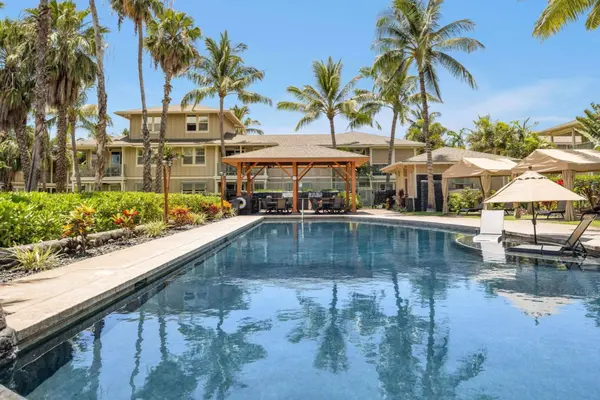
Discover Kai Ani Village: Coastal Living in the Heart of Kihei
Discover Kai Ani Village: Coastal Living in the Heart of Kihei Tucked into the heart of Kihei, Kai Ani Village offers something a little different: a thoughtfully designed residential community with a neighborhood feel, resort-style amenities, and an exceptionally convenient central Kihei location.