
Selling a South Maui luxury property from the mainland, or from across an ocean, is entirely achievable. Non-resident owners complete transactions every year without stepping foot on the island before closing. What separates a smooth, high-net transaction from a costly, drawn-out process comes down to four off-island factors: pricing strategy without daily market exposure, remote document execution under Hawaiʻi escrow laws, HARPTA withholding that holds 7.25% of your gross sales price at closing, and the elevated presentation standards that Wailea, Makena, Kihei, and Maui Meadows luxury buyers expect. This guide covers every step.
What Makes Selling a South Maui Home Different When You're Off-Island
Off-island South Maui sellers face four distinct challenges: pricing without daily market access, elevated presentation standards in the Wailea and Makena tier, remote document execution under Hawaiʻi escrow law, and HARPTA withholding of up to 7.25% of your gross sales price. Each requires specific preparation before you list.
The pricing challenge is sharpest in a thin, high-value segment. Wailea and Makena single-family homes recorded a median of $2,737,500 in Q1 2026, based on sales tracked through the Realtors Association of Maui. On the condo side, 28 Wailea and Makena units closed in Q1 2026 at a median of $1,985,000. That correction is real and ongoing, and an off-island seller relying on stale price assumptions will overprice, accumulate days on market, and ultimately negotiate from a weakened position.
The buyer profile compounds the challenge. Wailea and Makena attract qualified, internationally mobile buyers, many of whom are also remote, acquiring trophy assets they intend to hold privately. They rely on photography, drone footage, virtual tours, and agent representation to make multi-million-dollar decisions. If your home presentation does not meet that standard, it will not compete. Understanding these dynamics before you list is the foundation of a well-run off-island sale.
Choosing the Right Agent for a Remote South Maui Sale
For an off-island South Maui luxury sale, the right agent must have documented Wailea, Makena, upper Kihei, or Maui Meadows closings in the past 18 months, an established local vendor network, and a clear communication protocol for sellers who are not physically present.
Look specifically for someone with demonstrable experience in South Maui's luxury tier, not just Maui broadly. The entry-level Kihei condo market and a Makena oceanfront estate require completely different networks, pricing methodologies, and buyer outreach strategies.
Ask for a list of comparable sales closed in the past 18 months and clarify how communication is managed with off-island sellers: how frequently, through which channels, and who coordinates showings and vendor access when you are not on the ground. The right agent functions as your eyes and ears from day one, scheduling cleaning crews, stagers, photographers, and inspectors without requiring your physical presence.
In South Maui's luxury tier, this also means access to off-market and pocket listing networks. A meaningful share of Wailea and Makena transactions never reach the public MLS; a well-connected local agent can match your property to qualified buyers discreetly, which matters for sellers who prioritize privacy and want to avoid the exposure of a public listing.
Pricing strategy is where local expertise becomes irreplaceable. A skilled South Maui agent builds a comparative market analysis using recent closed sales, accounts for current days-on-market realities, and prices to generate early activity, avoiding overpriced listings that accumulate excess market exposure.
Preparing a South Maui Luxury Property for Market Without Being There
While remote logistics require extra coordination, preparing your property follows many of the same core principles outlined in our general guide to selling a home in South Maui. For off-island sellers specifically, four priorities must be managed remotely before listing: professional photography and video, pre-listing inspection and repairs, staging for vacant properties, and ongoing maintenance throughout the listing period.
Professional photography and video are a baseline requirement at this price tier. For South Maui luxury properties, this means a full editorial shoot, twilight photography, interior and exterior stills, drone footage over the coastline or golf course, and ideally a cinematic walkthrough video. Allocate budget for this before the listing goes live. For sellers who prefer a lower-profile approach, your agent can also arrange invitation-only virtual showings for pre-qualified buyers before any public marketing.
Pre-listing inspection and repair coordination should happen before photography. Your agent should be able to coordinate a licensed inspector and trusted local contractors to address anything that would surface as a red flag during buyer due diligence. A deferred-maintenance item that costs $3,000 to fix can become a $20,000 negotiating concession if it appears in the buyer's inspection report.
Staging is worth the investment at the luxury tier. If your property is vacant, which is common for off-island sellers, empty rooms photograph poorly and fail to convey scale. Professional staging for a Wailea or Makena property typically costs more than on the mainland, but the return in perceived value and final price routinely justifies it.
Ongoing maintenance during the listing period is a cost many off-island sellers overlook. South Maui's tropical climate accelerates deterioration: landscaping overgrows, humidity invites mildew, and a vacant home that hasn't been aired out for three weeks shows it. Budget for regular property checks, cleaning, and landscaping throughout the listing period.
How Remote Closing Works in Hawaiʻi
Sellers do not need to be present at closing in Hawaiʻi. The state's escrow-based system is specifically designed to accommodate off-island and mainland sellers, and the process is well-established.
Hawaiʻi is an escrow state, meaning a neutral third-party escrow and title company manages the entire transaction, holding funds, coordinating document execution, and recording the deed with the Bureau of Conveyances. Sellers sign closing documents, including the deed and settlement statement, a few days before the scheduled closing date. Those signatures must be notarized, which can be completed remotely with a mobile notary anywhere in the country or internationally. Once escrow confirms that funds have cleared under Hawaiʻi's Good Funds law and the deed is recorded, ownership transfers without requiring in-person attendance.
Remote document execution adds lead time. Build an additional three to ten business days into your closing timeline for document delivery, notarization, and return to escrow. For sellers holding through a trust or LLC, or who want to designate someone to sign on their behalf, a durable power of attorney executed and notarized in advance is the standard mechanism. Coordinate with escrow and a Hawaiʻi real estate attorney early in the transaction to avoid delays at closing.
HARPTA and FIRPTA: Withholding Rules for Off-Island Sellers
HARPTA requires any seller who is not a Hawaiʻi resident on the date of closing to have 7.25% of the gross sales price withheld from closing proceeds; FIRPTA adds a separate 15% federal withholding for non-U.S. citizens and foreign nationals. Understanding both, and filing the right exemption paperwork on time, is critical.
HARPTA (the Hawaiʻi Real Property Tax Act) applies to any seller who is not a Hawaiʻi resident on the date of closing. That includes mainland U.S. sellers, military members with out-of-state residency, former Hawaiʻi residents who have since moved away, and any foreign national. The withholding amount is 7.25% of the gross sales price, not your gain. On a $2,000,000 Wailea condominium, $145,000 is withheld from your closing proceeds at escrow, pending later reconciliation with your actual tax liability.
HARPTA is not a final tax. It is a withholding mechanism, the state's method of ensuring it collects whatever capital gains tax you may owe. If your actual liability is lower, or zero if selling at a loss, you can file for a refund. The refund process takes time, and if the right exemption paperwork is not filed before closing, the withholding happens automatically.
Exemptions and reductions are available through two primary forms from the Hawaiʻi Department of Taxation:
-
Form N-289 (Certification for Exemption from Withholding): Covers scenarios where no withholding is required, including Hawaiʻi residents certifying residency status, or sellers conducting a tax-deferred 1031 exchange under non-recognition treatment provisions certifying that gain is deferred. This pathway requires coordination with a qualified intermediary and must be documented before closing.
-
Form N-288B (Application for Withholding Certificate): Used by non-resident sellers who can demonstrate that their actual tax liability is less than 7.25% of the gross sales price, such as sellers with a capital loss, insufficient proceeds, or who have owned and occupied the property as a primary residence for at least two of the past five years. File Form N-288B at least ten business days before closing.
Work with a Hawaiʻi-licensed CPA or tax attorney who handles real estate transactions before you list.
FIRPTA (the Foreign Investment in Real Property Tax Act) applies on top of HARPTA for non-U.S. citizens and foreign nationals at a federal rate of 15% of the gross sales price. A Canadian seller closing on a $1,500,000 South Maui property faces a combined withholding exposure of $108,750 under HARPTA and $225,000 under FIRPTA, totaling $333,750 held from closing proceeds pending tax filings and reconciliation.
Both are withholding mechanisms rather than final taxes, and both can be reduced or eliminated with timely, correctly filed exemption paperwork. Your escrow company will provide standard forms but cannot serve as a tax advisor.
Other Seller Costs to Anticipate
Beyond HARPTA and FIRPTA, off-island sellers in South Maui should budget for these standard transaction costs:
| Cost Item | What to Know |
|---|---|
| Real estate commission | Typically around 5% of the sale price, covering marketing, negotiation, and full transaction management. |
| Hawaiʻi conveyance tax | A tiered state transfer tax calculated on the sale price; the rate scales with property value. |
| Title insurance and escrow fees | Typically shared between buyer and seller in Hawaiʻi; ranges broadly based on sale price. |
| HOA transfer fees and outstanding dues | Due through the closing date. Many Wailea and Makena properties carry HOA obligations; confirm transfer requirements prior to listing. |
| Vacation rental permit considerations | If your property has been operating as a short-term rental, permit transfers and compliance documentation are part of the closing process. Confirm current zoning and permit status with your agent and legal counsel before listing. |
| Ongoing carrying costs during the listing period | Property maintenance, landscaping, utilities, and HOA dues continue to accrue through closing. |
South Maui Market Snapshot: What Off-Island Sellers Need to Know Right Now
As of mid-2026, South Maui's luxury single-family market is characterized by premium pricing, with Wailea and Makena closing at a Q1 2026 median of $2,737,500 for single-family homes.
According to data from the Realtors Association of Maui, the island-wide single-family home median reached $1,445,000 early in 2026. In Kihei specifically, where the upper price tier of South Maui's single-family market begins, 33 single-family homes closed in Q1 2026 at a median of $1,300,000, representing a 65% increase in sales volume year-over-year. Wailea and Makena remain firmly in premium territory, drawing buyers from the U.S. mainland, Canada, and the Asia-Pacific region.
Time on market requires careful consideration. Single-family homes across Maui averaged elevated days on market through mid-2026. This is a market where correctly priced, beautifully presented properties generate activity, and overpriced listings accumulate days on market. Well-presented single-family properties in Wailea and Makena have faced a narrow field of comparable active listings, a dynamic that supports list-price discipline for sellers who enter the market prepared.
Frequently Asked Questions
Do I need to travel to Maui to sell my home if I live on the mainland?
No. Hawaiʻi's escrow-based closing system is fully compatible with off-island sellers. You sign closing documents a few days before the closing date, notarized remotely by a mobile notary wherever you are located. The escrow company handles recording with the Bureau of Conveyances and confirms ownership transfer when complete.
What is HARPTA and how much will it affect my closing proceeds as a non-resident seller?
HARPTA is Hawaiʻi's withholding mechanism for non-resident sellers. If you are not a Hawaiʻi resident on the date of closing, 7.25% of your gross sales price is withheld from your closing proceeds pending reconciliation with your actual state tax liability. On a $2,000,000 sale, that is $145,000 withheld. Exemptions are available, including for Hawaiʻi residents and 1031 exchange sellers (Form N-289), and for sellers who can demonstrate a lower actual tax liability (Form N-288B). The key forms must be filed before closing, and the N-288B deadline is at least ten business days prior.
What is the difference between HARPTA and FIRPTA?
| Feature | HARPTA | FIRPTA |
|---|---|---|
| Governing law | Hawaiʻi state | U.S. federal |
| Applies to | Any non-Hawaiʻi resident seller, including mainland U.S. citizens | Non-U.S. citizens and foreign nationals only |
| Withholding rate | 7.25% of gross sales price | 15% of gross sales price |
| Do both apply? | Yes, to foreign nationals selling Hawaiʻi real estate | Yes, simultaneously with HARPTA |
| Primary exemption path | Form N-289 (residents and 1031 exchange); Form N-288B (reduced liability) | IRS Form 8288-B (withholding certificate) |
How long does it typically take to sell a luxury home in Wailea or Makena right now?
Based on Realtors Association of Maui market data, single-family homes across Maui have averaged longer timelines to sell compared to previous years. Wailea and Makena are premium-tier submarkets where correctly priced, professionally presented properties attract serious, qualified buyers, but the buyer pool at any given price point is focused. Off-island sellers should plan for a realistic runway and price accurately from day one rather than testing the market high.
What happens to my vacation rental permit when I sell my South Maui property?
Vacation rental permits in Maui County are not automatically transferred to buyers. If your property has been operating as a short-term rental, the permit status, transferability, and any compliance documentation must be addressed as part of the closing process. Confirm the current status with your agent and a Hawaiʻi real estate attorney before listing, as buyers of Wailea and Kihei condos frequently evaluate rental income potential.
Can I handle a South Maui home sale through a trust or LLC while living off-island?
Yes, but the documentation requirements are more detailed. Trusts and LLCs selling Hawaiʻi real estate must provide entity documentation to escrow, and signing authority must be clearly established. A power of attorney executed in advance can designate a representative to sign on the entity's behalf. Coordinate with your escrow company and a Hawaiʻi real estate attorney early in the process to avoid delays at closing.
Should I consider selling off-market in Wailea or Makena?
For luxury properties in Wailea and Makena, an off-market or pocket listing strategy is worth discussing with your agent before defaulting to a full public MLS launch. A meaningful share of high-end South Maui transactions are completed quietly, matching a vetted, pre-qualified buyer pool without the days-on-market exposure that a public listing accumulates.
FROM OUR BLOG

Central Maui Waterfront & Golf-Course Homes: Buyer's Guide
Central Maui delivers something rare in Hawaii luxury real estate: direct oceanfront living at Mā'alaea Bay, private-club golf at King Kamehameha Golf Club, anchored by a landmark clubhouse built from Frank Lloyd Wright's archived designs, and genuine island connectivity, all within the same market.
Central Maui Trails, Parks & Outdoor Recreation
Central Maui doesn't get talked about the way South Maui or West Maui do, and honestly, that's part of its appeal. Kahului, Wailuku, and Māʻalaea sit inside one of the most trail-rich, ecologically diverse pockets of the island, and for the people who live there, that access isn't a weekend plan. It
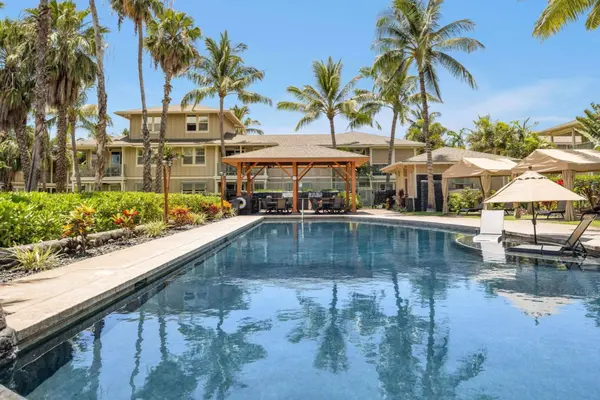
Discover Kai Ani Village: Coastal Living in the Heart of Kihei
Discover Kai Ani Village: Coastal Living in the Heart of Kihei Tucked into the heart of Kihei, Kai Ani Village offers something a little different: a thoughtfully designed residential community with a neighborhood feel, resort-style amenities, and an exceptionally convenient central Kihei location.