
South Maui, spanning Kihei, Wailea, Makena, and Maui Meadows, is the sunniest, most sought-after stretch of coastline on the island. Sitting in the rain shadow of Haleakalā, this leeward coast receives roughly 11 to 15 inches of rainfall per year while the island's windward slopes see upward of 75 inches annually, a gap that shapes daily life here more than any other single factor. For luxury buyers and relocators, South Maui consistently delivers more than the postcard promises: world-class beaches, resort-caliber amenities, and a real estate spectrum anchored in the luxury tier, from sophisticated resort condominiums to private multi-acre estates. Here is an honest, neighborhood-by-neighborhood look at what daily life actually looks like: the rhythms, the trade-offs, and the very real rewards.
The South Maui Climate: Why It Changes Everything About Daily Life
South Maui receives roughly 11 to 15 inches of rainfall per year, among the lowest of any residential area in Hawaii, placing it in a near-desert microclimate while the island's windward side sees upward of 75 inches annually on the mountain slopes, per the National Weather Service Honolulu Forecast Office. That gap defines South Maui living more than any other single factor.
In practical terms, your morning walk along the Wailea Beach Walk almost never gets rained out. Sunrise paddleboard sessions off Kamaole Beach happen in the same blue-sky conditions month after month. Summer highs hover in the upper 80s°F; winter rarely dips below the low 70s. The one caveat experienced South Maui residents mention: the northern fringe of Kihei, near Sugar Beach, can get notably windy and dusty when tradewinds strengthen in summer. South Kihei, Maui Meadows, Wailea, and Makena are far more sheltered and consistently pleasant year-round.
South Maui at a Glance: Choosing Your Neighborhood
Each of South Maui's four sub-markets has a distinct character, price architecture, and buyer profile. The table below gives you a fast orientation before diving deeper into each community.
| Neighborhood | Property Types | Price Tier | Atmosphere | Best Fit |
|---|---|---|---|---|
| Kihei | Condos, single-family homes | Entry to upper-mid | Authentic, local, lively | First-time island buyers, remote workers, vacation-rental investors |
| Wailea | Resort condos, estate homes | Luxury to ultra-luxury | Master-planned, resort-caliber | Buyers seeking resort infrastructure, walkable beach access, premium amenity |
| Makena | Estate homesites, beach cottages | Ultra-luxury | Private, elemental, members-only | Buyers prioritizing land, seclusion, and world-class club membership |
| Maui Meadows | Single-family homes on ½-acre+ lots | Upper-mid to luxury | Hillside, panoramic, spacious | Buyers who want South Maui views and land without a resort-corridor address |
Kihei: A Vibrant Community at the Heart of South Maui Living
Kihei is where South Maui's day-to-day life actually happens, a livelier, more textured community than many mainland relocators expect. Maui's largest residential neighborhood stretches several miles along the coast and serves as the social and commercial spine of the south shore, home to farmers markets, surf schools, and some of the island's most locally beloved restaurants. The three Kamaole Beach Parks running through the heart of town function as the community's backyard. On any given morning you will find locals walking the sand, watching humpback whales in winter (December through April is peak season), and setting up for sunrise yoga on the lawn.
South Kihei and the Luxury Tier
South Kihei represents a distinct residential market from the busier northern end of town. Larger single-family homes on quieter streets, proximity to Wailea's resort corridor, and a concentration of upper-tier condominiums along the southernmost reaches of South Kihei Road characterize this segment. Properties here trend well above the island-wide median and attract buyers who want Kihei's authentic character alongside real luxury finishes and ocean proximity.
If you're specifically weighing a South Kihei condo purchase, I've put together a closer look at what off-island buyers should know before making an offer, including how zoning affects a unit's rental potential.
Where to Eat in Kihei
The dining scene is genuinely impressive for a town of this size. Koiso Sushi Bar, seating just 12 to 16 guests per seating, with two seatings nightly, under master Chef Hiro-san, sources fish flown in from Japan and off local boats daily; reservations often fill well in advance. Miso Phat Sushi operates two Kihei locations: the original near Azeka Shopping Center and a newer oceanfront outpost, Miso Phat Coast, at the Maui Coast Hotel. Nalu's South Shore Grill, the open-air, live-music anchor at Azeka, remains the neighborhood's most reliably convivial gathering spot any night of the week.
Wailea: Where Luxury Living in South Maui Reaches Its Full Expression
Wailea is the address many luxury buyers come to South Maui specifically seeking, and it earns that reputation across every dimension. Developed across roughly 1,500 acres of lava-edged coastline as a master-planned resort community, it is home to some of the finest beaches in the United States, including Wailea Beach, Ulua, and Polo Beach, along with an infrastructure of amenity, dining, and service that is simply unmatched elsewhere on the island.
The Wailea Beach Walk connects the major beaches in a smooth, landscaped coastal path that residents use morning and evening as a meditative daily ritual. Championship golf at the Wailea Golf Club, with three courses (Gold, Emerald, and Blue) winding through lava fields and tropical gardens, completes the picture for buyers who want resort-quality recreation built into every day. The culinary scene has matured dramatically: Nobu and Morimoto Maui bring celebrity-chef gravity to the resort corridor, while Aurum and Koast represent a newer generation of serious dining earning loyal followings among residents who want something beyond traditional resort fare. Gather on Maui (formerly Gannon's), perched above the Wailea golf courses with sweeping panoramic views of the Pacific and Molokini, remains a beloved anchor for special evenings.
Real estate in Wailea reflects its position as South Maui's, and arguably Maui's, premier luxury market. Properties range from high-design resort condominiums to single-family estate homes commanding ocean and neighbor-island views. Recent monthly reports from the Realtors Association of Maui have put the Wailea/Makena corridor's single-family median in the two-to-three-million-dollar range, well above the island-wide figure of $1,150,000 recorded for July 2026. Because so few luxury homes close in any given month, that median can swing significantly from one report to the next, so it's worth asking for the most current comparable sales rather than relying on a single monthly snapshot. The corridor continues to attract buyers who prioritize quality of the environment and long-term asset strength over entry price.
For a closer look at what makes Wailea and neighboring Makena distinct from the rest of South Maui, from gated community structures to who typically buy here, see my full guide to Maui's premier resort communities.
What Living in South Maui Actually Feels Like Day to Day
Daily life in South Maui moves to a quieter, ocean-anchored rhythm that most residents describe as immediately and permanently different from anywhere on the mainland. You wake up before 6:00 a.m. because the light is extraordinary and staying asleep feels like a waste.
The beach is a five-minute drive or a ten-minute walk, and at that hour it belongs almost entirely to residents: dog walkers, serious swimmers, and people who have simply built the ocean into their morning routine rather than treating it as a destination.
The trade-offs that serious candidates for South Maui living need to reckon with honestly:
-
Geographic isolation. There is no driving to another city for a weekend of urban variety. Inter-island flights offer access to Oahu's energy or the Big Island's remoteness, but the mainland is a five-to-six-hour flight.
-
Cost of living. Groceries, utilities, and most goods carry the premium of island geography at every price level, a real financial consideration even for well-capitalized buyers.
-
Employment market. The local economy skews heavily toward tourism, healthcare, and real estate. Remote work has changed the calculus meaningfully for a large share of new arrivals, but financial independence or location-independent income remains a practical prerequisite for many.
-
Island scale. Some people, particularly those accustomed to urban variety, experience a sense of confinement over time. Honest self-assessment on this point is worth doing before committing.
These are reasons to enter with clarity and the right financial foundation in place.
Makena: Seclusion, Scale, and Ultra-Luxury on South Maui's Southern Shore
Makena delivers a rare combination for luxury buyers: complete privacy, meaningful acreage, and oceanfront living in one of Maui's most elemental landscapes. Where Wailea ends, the road narrows, the land opens, and the coastline takes on a wilder, more dramatic character. Big Beach (officially Oneloa) is one of the longest, most powerful stretches of sand on the island, remaining largely undeveloped by design.
Residentially, Makena is defined by Mākena Golf & Beach Club, a members-only private community developed and operated by Discovery Land Company, whose global portfolio of ultra-luxury residential club communities has set a consistent benchmark for privacy, land-scale living, and world-class amenity. Spanning roughly 1,800 acres with 18 holes of championship golf, beachfront cottages, and custom estate homesites at The Ranch at Mākena, it operates at a tier of luxury living rare anywhere in the world. For the buyer seeking complete privacy, significant land, and an experience shaped by the rhythms of the natural landscape rather than resort to foot traffic, Makena is the answer. Explore available Makena estate properties.
Maui Meadows: Sweeping Views, Half-Acre Lots, and a Privacy That South Maui Living Rarely Offers
Maui Meadows is South Maui's best-kept secret for luxury buyers who want sweeping ocean views, half-acre-plus lots, and genuine privacy without paying Wailea beachfront prices. Perched on the hillside above Wailea, technically within Kihei's southern boundary, the neighborhood is home to several hundred properties, predominantly single-family, on parcels that deliver the panoramic view corridors Wailea buyers prize, with the added luxury of land, something the beachside resort market rarely offers.
Cooler temperatures than the coast below, quieter streets with limited vacation rental activity, and an architectural range that spans classic Hawaiian plantation-style to contemporary luxury estates with infinity pools and rooftop lanais make this a neighborhood for people who want to live in Maui, not simply adjacent to a resort. Maui Meadows consistently attracts buyers who discover that its combination of scale, seclusion, and visual drama is something the beachside market simply cannot replicate. Browse current Maui Meadows listings.
The South Maui Luxury Real Estate Market: Current Conditions and What They Mean for Buyers
South Maui, and Kihei in particular, has consistently ranked among the most active submarkets on the island by transaction volume, according to reporting from the Realtors Association of Maui. Island-wide, the single-family home median reached $1,150,000 in July 2026, down 12.5% from July 2025, while the median condo price rose slightly to $690,000. Homes are taking longer to sell than in recent years, with single-family homes spending a median of 135 days on market in July and condos 153 days, giving today's buyers meaningfully more time and negotiating room than in the tightest years of the past cycle.
Within that broader picture, South Maui's luxury tier tells a different story. The Wailea/Makena corridor continues to command a single-family median well above the island-wide figure, frequently in the two-to-three-million-dollar range in recent monthly reports, confirming sustained buyer conviction in South Maui's top-tier assets even as the broader market has softened. Well-positioned luxury properties are still closing at strong numbers; buyers are simply more deliberate and better informed than they were a year or two ago.
For buyers, the current environment offers more negotiating room, particularly in condos, than has existed in recent memory. Investors should verify each property's short-term rental status carefully. Maui County's Bill 9 phases out short-term rental use in apartment-zoned condominiums across South Maui by January 1, 2031, while a follow-up measure, Bill 88, created a potential pathway (through new H-3 and H-4 hotel zoning classifications) for some of those buildings to continue operating as vacation rentals. As of mid-2026, roughly 4,500 units across the county are potentially eligible to apply, but only a portion of those are actually moving through the county's Planning Commission review process, and none of it is finalized; all three county planning commissions have in fact opposed creating the new zoning pathway. This is a landscape that makes current, local expertise essential, not a settled set of rules, per Maui County. Each submarket has its own pricing logic and zoning nuances; entry-level Kihei condos and Wailea estate homes are distinct markets and should be evaluated separately.
If you're weighing a purchase anywhere in this range, my guide to how Maui home valuations actually work walks through how I read comparable sales in a market this segmented.
Frequently Asked Questions About Living in South Maui
-
What defines the luxury tier in South Maui real estate, and which neighborhoods represent the top of the market?
South Maui's luxury tier generally begins at properties priced above $2 million, though the definition shifts meaningfully by neighborhood. Wailea is the market's established luxury benchmark, with resort condominiums and estate homes regularly posting some of the highest submarket medians the Realtors Association of Maui tracks, while Makena's Mākena Golf & Beach Club represents the ultra-luxury segment, with custom homesites at The Ranch at Mākena. Maui Meadows and South Kihei serve the upper tier of the broader market, offering luxury single-family homes at price points meaningfully below the Wailea resort corridor. For buyers focused on South Maui luxury specifically, the relevant filter is always submarket and property type rather than island-wide averages.
-
What is the difference between living in Kihei versus Wailea in South Maui?
Kihei is South Maui's largest residential community: authentic, locally rooted, and offering the broadest range of price points from entry-level condos to upscale South Kihei homes. Wailea is a master-planned luxury resort community defined by world-class beaches, resort infrastructure, championship golf, and premium real estate with essentially no entry-level inventory. Think of Kihei as where residents live their daily lives and Wailea as where those residents go to feel like they are on vacation, except for Wailea residents, who never have to leave.
-
Is South Maui a good place for luxury real estate investment?
South Maui has historically been one of Maui's strongest markets for real estate investment, particularly for properties with valid short-term rental permits. Kihei's established condo inventory includes complexes with long rental histories and consistent visitor demand; Wailea commands significantly higher nightly rates at the upper end. Buyers should verify each property's permit status carefully given Maui County's evolving short-term rental legislation. Bill 9 phases out apartment-zoned vacation rentals across South Maui by January 1, 2031, while Bill 88 has opened a potential path for some buildings to seek new hotel zoning, though that process is still working its way through county review and is far from settled. Working with an agent who understands which buildings retain legal rental rights, and which are still an open question, is essential.
-
How far is South Maui from the airport and essential services?
Kihei is approximately 20 to 25 minutes from Kahului Airport; Wailea and Makena add 5 to 10 minutes. Major grocery stores, Maui Memorial Medical Center, and the island's main retail concentration are all in Kahului and Wailuku, accessible from South Maui within 30 to 40 minutes outside of peak commute windows on Piilani Highway.
-
What are the honest challenges of living in South Maui?
The cost of living is genuinely high: housing, groceries, utilities, and goods all carry the premium of island geography. The local employment market skews heavily toward tourism and hospitality, making financial independence or remote-work income a practical prerequisite for many buyers. Geographic isolation is real: the mainland is a long flight, and the island is small enough that some people experience a sense of confinement over time. These are not reasons to avoid South Maui; they are reasons to enter with complete clarity and the right financial foundation in place.
Jyoti Graziano serves buyers and sellers throughout South Maui and beyond. She can be reached at +1 (808) 793-6181 or send an email to jyoti@mauiluxeproperties.com
FROM OUR BLOG
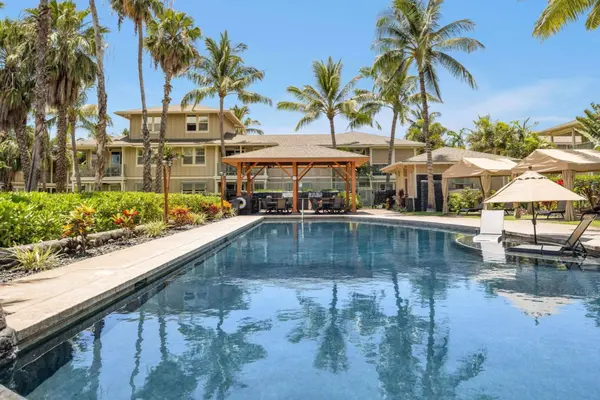
Discover Kai Ani Village: Coastal Living in the Heart of Kihei
Discover Kai Ani Village: Coastal Living in the Heart of Kihei Tucked into the heart of Kihei, Kai Ani Village offers something a little different: a thoughtfully designed residential community with a neighborhood feel, resort-style amenities, and an exceptionally convenient central Kihei location.

Relocating to Maui vs Vacationing in Maui: Key Differences Buyers Should Know
Vacationing in Maui has a way of quietly reshaping what you think everyday life could feel like. The light, the water, the pace of things. It's easy to start doing the math in your head between cocktails at a Wailea beach bar. But relocating to Maui is a fundamentally different commitment, one that
Moving to Central Maui: What to Know Before You Buy
Central Maui, anchored by Kahului, Wailuku, and the tucked-away harbor village of Maʻalaea, is the island's most practical and underrated place to put down permanent roots. Single-family homes here typically trade at a meaningful discount to Maui's resort coasts, meaning buyers gain real square foot